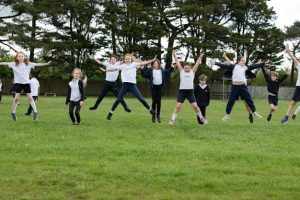
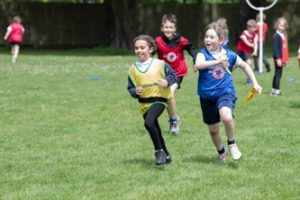
The Leadership Skills Foundation is a prominent awarding organisation dedicated to the development of leadership skills in young people. They bring these essential skills to life through practically applied qualifications and accredited awards across the curriculum and beyond, empowering learners with the confidence to believe, the qualities to lead and the skills to succeed.
Therefore, as a trauma informed school, Chaigeley recognises the importance PE can play in the development of SEMH pupils and how a simple game can have a huge impact on the development or re-establishment of neural pathways to aid in the recovery process.
Using research linked to how best to implement a PE programme for such a diverse and complex set of individuals; PE at Chaigeley School will be structured around the development of the core skills used in PE and how these skills can be linked to everyday life.
These will be tracked and assessed through the Key Stages of school but will reflect each individual pupil’s pathway and how they can develop these skills as an individual utilising various qualifications offered by the Leadership Skills Foundation and the Sports Leadership programmes they offer.
PlayMaker Award
The PlayMaker Award helps learners develop leadership skills such as organisation, communication and teamwork. It will also build confidence and self-esteem as your learners take on the responsibility of assisting in leading their peers and younger children.
Anyone can become a PlayMaker, regardless of their leadership experience. The PlayMaker Award is designed in a way so that learners can participate, lead activities that interest them, and learn about essential leadership skills.
Young Leader Award
First step towards leadership skills.
The Young Leader Award offers learners the first stepping stone in leadership skill development. Learners gain experience of organising and leading small games and activities for their peers and are supported to start the development of the skills needed to take on greater responsibilities.
PE Life Skills Award
PE teaches valuable life skills such as resilience, collaboration, and independence – all of which can inspire and empower young people to excel in all areas of their lives. The PE Life Skills Award recognises and rewards learners as they develop these essential life skills through the PE curriculum.
Celebrate the development of life skills through PE
Developed in partnership with the Youth Sport Trust, the PE Life Skills highlights and celebrates the full range of achievements young people gain through PE, boosting engagement and nurturing a lifelong, positive relationship with physical activity.
Now in its fourth year, this award is designed to work across primary and secondary school stages. It is tailored to meet the developmental needs at each level, ensuring inclusivity for a wide range of abilities within the same class. This makes it particularly suitable for alternative provision settings, special schools, and hospital schools.
The resources for the award provide schools with a framework and the tools to support delivery to students and rewards learners with a certificate at the end of the award.
Trauma and Child Development Glossary
Supporting parents, carers and staff in understanding key terms
Challenging behaviour is often a sign that a child is feeling distressed, scared, or overwhelmed—not just being defiant. It’s their way of showing they need help.
Aggression or outbursts – May show fear, frustration, or a need to feel in control.
Withdrawal or silence – Could mean the child feels anxious, ashamed, or shut down.
Co-Regulation
The process of an adult helping a child manage their emotions by staying calm and attuned. This may happen through play, talking, or just being with the child.
Fight–Flight–Freeze–Fawn (FFFF) Response
The body’s survival system, which trauma can keep on “high alert”:
• Fight – Aggression or defiance.
• Flight – Avoiding, running, or hiding.
• Freeze – Shutting down or going silent.
• Fawn – People-pleasing to avoid conflict.
Motional is an online tool used in schools to help understand and support children’s emotional wellbeing and mental health. It is based on research from Trauma-Informed Schools and Adverse Childhood Experiences (ACEs).
PACE – Playfulness, Acceptance, Curiosity, Empathy
An attitude and approach that helps adults build safe, trusting relationships with children who have experienced trauma. Developed by Dr. Dan Hughes, PACE supports emotional connection, regulation, and healing.
Playfulness – Using lightness and warmth in your voice and interactions to reduce tension and build connection.
Acceptance – Valuing the child without judgment, even when their behaviour is challenging.
Curiosity – Gently wondering about the child’s internal experience (e.g., “I wonder if you were feeling scared?”), rather than assuming or accusing.
Empathy – Feeling with the child and showing them they’re not alone in their emotions.
Team Around the Child – Emotionally Available Adult
A network of caring adults, with at least one consistently emotionally available adult, supporting the child’s emotional and developmental needs.
WINE – Wonder, Imagine, Notice, Empathy
A trauma-informed approach promoting curiosity and empathy to understand and support children’s feelings and behaviours.
A light hearted and fun activity of which the children blow bubbles, describing how they are feeling and the experience.
Step by step guide
1. Help the children to move into a circle. Encourage, help and enable children to sit together with sensitive adults placing a kind hand around a child that needs reassurance or a sense of containment. Be aware of those children in the group who find touch difficult and help them to feel acknowledged, safe and understood.
2. The adult then shows the children the bubble game – a bowl of water with washing up liquid inside it and encourages one of the children to have a go at blowing into the water with a straw. As the bubbles emerge and swarm, the adult models the delight and matches the delight of the child blowing the bubbles and the other children who are watching the bubbles emerge. The adult shows delight in their facial expressions and matches the noises of delight that the children make, then naming the experience for the children…. “wow… look!
There are lots of bubbles!!” “Bubbling up and out of the bowl” “They are sparkly and magical”… the adult giggles and laughs and names the sensation… “those bubbles are in my tummy too…. Bubbling my happiness and excitement” “It feels tickly on my nose…”
3. Invite the children to have a go with a partner. Notice the sensations that the children might be feeling, naming the sensations and noticing out loud what it might be like so that the child can hear and feel the adult is alongside them and containing them through the activity but also modelling their delight and joy. It is important that the adults face is open, fun and involved in the adventure of discovery of what the bubbles can do and that this is named and noticed for the children
out loud.
4. As an extension of this activity, children can be encouraged to add food colouring to the bubbles or glitter to experiment with and to see what happens to the bubbles.


 Sports Leadership